
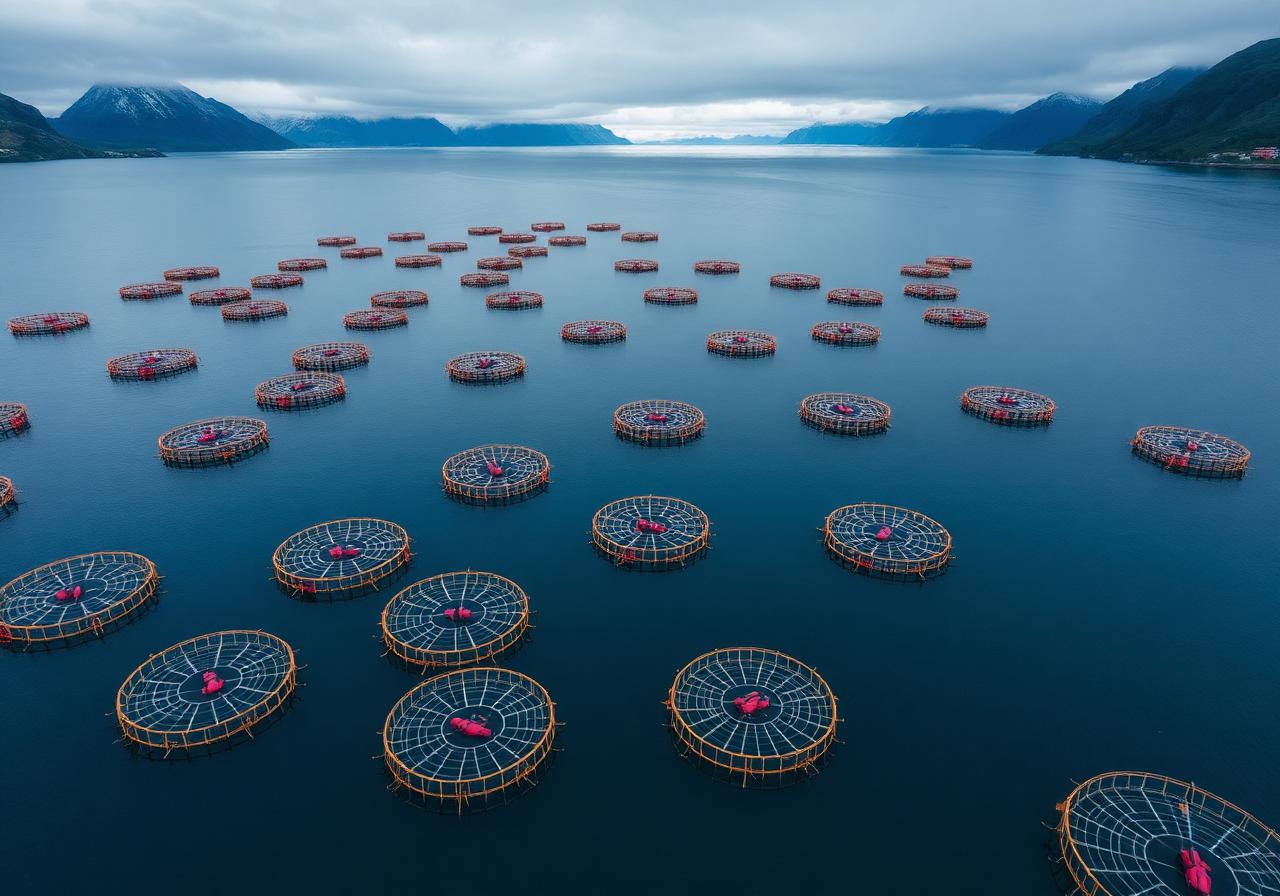
Earlier visibility into changing biological conditions.
Continuous monitoring helps aquaculture teams follow changes in algae, plankton and microscopic conditions over time, adding context to feeding, fish welfare and operational decisions.
Focus
What sea-based teams get out of it
01
Detect emerging change
See when algae, plankton or particle activity starts moving away from the site's normal picture, between routine samples.
02
Investigate with a timeline
Review how conditions developed hour by hour instead of comparing two isolated snapshots.
03
Add biological context
Bring microscopic conditions into the discussion around feeding, fish welfare and handling operations.
In practice
The questions a continuous record helps you answer
When did the change begin?
Is it increasing?
Is it isolated?
Are similar patterns appearing elsewhere?
What happened before fish behaviour changed?
How did conditions develop?
FP AQUA does not predict events. It documents how conditions develop, so teams can investigate earlier and with better context.
AquaMind
From observation to understanding.
Site · Lofoten 04
Algae activity increasing
Change detected
What changed
3.2x above normal site baseline
Development
Increasing over the last six hours
Context
Different from the site's normal seasonal pattern
Suggested follow-up
Review local conditions and consider targeted sampling.
Change detected
Algae activity increasing at the site, above its own established baseline.
Development
Increasing over the last six hours rather than a single elevated reading.
Context
Compared with the site's normal seasonal pattern and earlier events.
Suggested follow-up
Review local conditions and consider targeted sampling.
AquaLens sees. AquaMind understands.
Observe. Detect change. Understand. Respond.
Observe
Detect change
Understand
Respond